Redefining Surface Protection through Articulated Concrete Mats
In the context of environmental and construction projects, protecting the surfaces is crucial. Riverbanks, slopes and soils and shorelines endure constant stress from wind, water and heavy use. Without adequate protection the surfaces could erode and shift or even fail. This could damage infrastructure, raise the cost of repairs, and pose security risks.
Engineers continue to find more effective ways to safeguard these surfaces. Traditional methods like concrete poured or loose stone may work however they usually take longer, require greater maintenance, and might not be able to adapt well to the changing environment.
Nowadays, articulated concrete mats provide a more efficient and more secure solution. They combine the strength as well as flexibility and efficacy. They shield surfaces and adapt to the natural movements of the ground. This makes them a great choice for modern-day building and protection of the environment.
This blog we'll describe the concept behind articulated concrete mats what they are, how they work and what they can do, their advantages, application as well as the process of installation and the reason they are transforming surface protection.
What Are Articulated Concrete Mats?
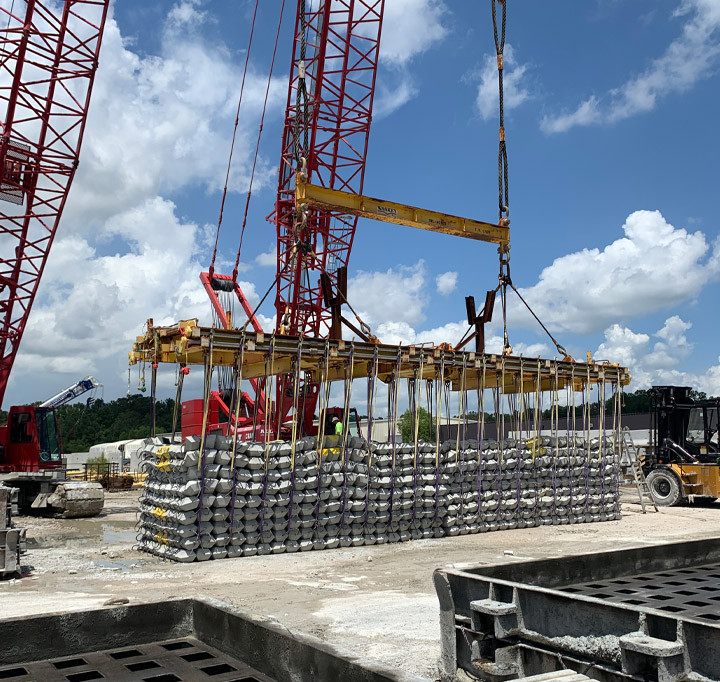
Articulated concrete mats are comprised of a number of concrete blocks joined to each other. The blocks create an elastic mat that is able to be bent and adjusted to various surfaces.
Each block is connected to other blocks by using connectors or cables. This lets the mat move without breaking. Contrary to concrete slabs made of solid cement that are made of concrete they can be shaped to conform to the shape of the ground.
The key features are:
- Interconnected concrete blocks
- Blocks can be connected in a variety of ways.
- Material that is durable and sturdy
- Spaces between blocks that allow for water flow
Thanks to these attributes articulated mats help protect surfaces while permitting natural movement.
How Articulated Concrete Mats Work
The mats are designed to safeguard surfaces by forming the strength and flexibility above the surface. They stop erosion and lessen the force from external pressures.
Here's how they operate:
Surface Protection
The mats are able to cover the ground or soil completely. They prevent wind, water or traffic from causing damage the surface.
Flexibility
The blocks that are connected allow it to bend, and then adjust to the uneven terrain. This makes it easier for the mat to remain in place even if the soil shifts.
Load Distribution
The mat's weight spreads across a large space. This helps reduce the stress on the soil, and also prevents the soil from sinking or causing damage.
Water Flow Control
The spaces between the blocks allow water to flow through. This helps reduce pressure and keeps water from moving or lifting the mat.
The combination of flexibility and strength creates articulated mats that are extremely effective.
Key Benefits of Articulated Concrete Mats
Strong Erosion Control
Erosion is a serious issue in many areas. Waves and water flow are able to remove soil in a short time.
Mats that are articulated help with:
- The soil is protected from direct water impacts
- Insuring soil is held in place
- Preventing surface damage
They are extremely useful in slopes, riverbanks and coastal areas.
Flexibility and Adaptability
As opposed to hard materials, articulated mats can be adjusted in shape to conform with the contours of their surface.
- They are suitable for uneven ground
- They respond to curves and slopes
- They may move slightly when the changes in the soil
This helps reduce cracking and increases long-term performance.
Long-Lasting Durability
Articulated mats are constructed of high-strength cement.
- They can withstand weather and water as well as massive loads
- They can be found in extreme environments.
- They require minimal upkeep
Their durability makes them an economical solution over the course of time.
Fast Installation
It is crucial to have time when building. Mats that are articulated can be put in place quickly.
- Pre-assembled sections speed up the work
- The site needs less preparation
- Installation is less time-consuming than conventional methods.
This can help projects get completed faster.
Environmental Benefits
Articulated mats help support natural systems.
- The water flows through the cracks
- Some designs allow vegetation growth
- Reduced disturbance to habitats of natural species
This makes them a great choice for areas with a high degree of environmental sensitivity.
Applications of Articulated Concrete Mats
Concrete mats that are sculpted can be used in a variety of construction projects.
Riverbank Protection
The banks of rivers can be eroded in time. The mats are shaped to protect the banks and help keep them in place.
Shoreline Protection
The coastal areas are exposed to the waves as well as tides. The mats guard shorelines against erosion and the damage.
Slope Stabilization
Slopes can break down due to the rain or the movement of the soil. Mats that are made of articulation hold soil and stop the precast duct bank occurrence of landslides.
Canal and Dam Protection
The structures of water, such as dams and canals require strong protection. Mats can reduce the damage caused by rapid-moving water.
Infrastructure Projects
Bridges, roads pipelines and other roads typically use mats that are articulated to protect surfaces and stop erosion.
Installation Process
Installing concrete mats that are articulated is easy and quick.
Site Preparation
Workers clean up of debris, and then prepare for the ground. They can be able to level the ground, if required.
Delivery
The mats are delivered to the location in sections. They are easy to work with.
Placement
Employers use cranes or other equipment to set mats on top of the surface.
Connection
They join the sections, creating an unbroken layer.
Adjustment
The workers adjust the mats to conform to the shape that the floor has.
Inspection
The installation is checked to ensure that it is covered properly and in alignment.
This saves time as well as decreases the amount of work.
Design Considerations
Engineers need to take into consideration a variety of factors with regard to articulated mats.
- The type of soil
- Pressure and flow of water
- Slope angle
- Requirements for loading
- Conditions of the environment
The right design and layout ensures that the mats are durable and last for a long time.
Comparison with traditional methods
| Feature | Articulated Concrete Mats | Traditional Methods |
|---|---|---|
| Flexibility | High | Low |
| Installation Time | Fast | Slow |
| Durability | Long-lasting | May require repairs |
| Adaptability | Excellent | Limited |
| Maintenance | Low | Higher |
This is a good example of the reason why articulated mats are getting more well-known.
Common Challenges and Solutions
Transportation
Mats can be very heavy and require careful control.
Solution: Use proper equipment and plan your delivery.
Initial Cost
The initial cost might be more expensive.
Solution: Consider long-term savings and long-term durability.
Complex Sites
Uneven terrain is a challenge.
Solution: Use the flexibility mats and the correct methods of installation.
Why Articulated Concrete Mats Are a Modern Solution
Articulated concrete mats are revolutionizing the way engineers safeguard surfaces.
- They are a combination of strength and flexibility.
- They adapt to the different conditions
- They can reduce the time to install.
- They offer protection for the long term.
Traditional methods are often under difficult conditions, however articulated mats work well in various situations.
Future of Surface Protection
As technology for construction improves the quality of Mats with articulated edges will continue develop.
- Stronger materials made of better materials will be stronger.
- New designs will increase the ability to adapt
- Installation methods will be more efficient.
These enhancements can make articulated mats more efficient.
Conclusion
Articulated concrete mats are the strongest, most flexible, and effective solution to protect surfaces. They safeguard slopes, soil and structures from damage and erosion and adjusting to the changing conditions of nature.
They are simple to set up and require minimal maintenance and can last for years. They are the ideal option for modern construction as well as green projects.
Redefining protection for surfaces with concrete mats that can be articulated, which means you are creating faster, smarter and more durable. They offer a secure solution that is able to meet the demands of the construction industry today.