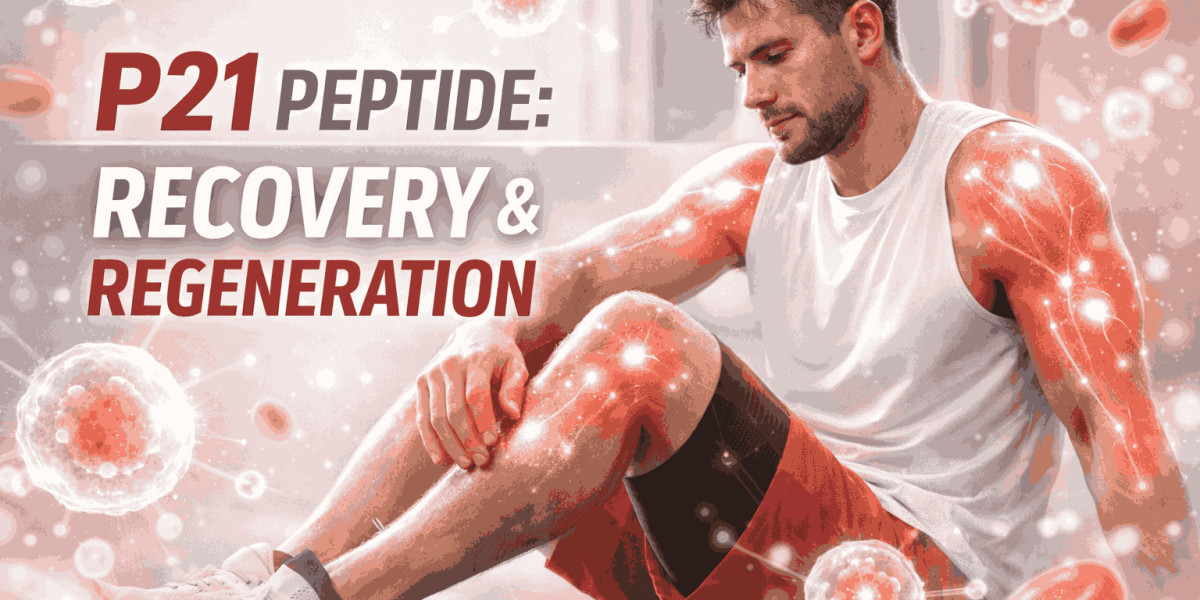
The world of performance enhancement is evolving fast and if you’re not paying attention, you’re already behind. One compound that’s starting to dominate serious conversations in recovery science is the p21 peptide. This isn’t just another hyped-up supplement. It’s a targeted, research-driven compound designed to push muscle repair and tissue recovery to the next level.
If you’re chasing faster healing, reduced downtime, and real performance gains, this is where things get interesting.
What Is P21 Peptide and Why Is Everyone Talking About It?
P21 peptide is a synthetic peptide derived from a segment of a naturally occurring protein involved in cellular growth and repair. But here’s the difference: it's engineered to amplify the body’s regenerative signaling pathways in a highly focused way.
Unlike generic recovery aids that flood your system with broad effects, P21 works with precision. It interacts with growth factors, enhances cellular communication, and supports tissue repair at a deeper biological level.
Athletes, bodybuilders, and biohackers are paying attention for one simple reason: it targets recovery where it actually happens inside your cells.
How P21 Peptide Supports Muscle Tissue Repair
Muscle growth doesn’t happen in the gym. It happens after your body repairs microscopic damage caused by intense training. That’s where P21 peptide steps in and changes the game.
This peptide is believed to:
- Stimulate cellular regeneration
- Enhance protein synthesis signaling
- Support repair of damaged muscle fibers
- Improve recovery speed between workouts
Instead of waiting days to feel normal again, users report a noticeable reduction in soreness and faster bounce-back times. That means more consistency, more training sessions, and ultimately more progress.
And let’s be clear: consistency beats intensity every time.
The Science Behind Faster Recovery
Recovery is controlled by complex biological systems growth factors, signaling proteins, and cellular repair mechanisms all working together. When these systems are optimized, your body becomes incredibly efficient at healing.
P21 peptide appears to enhance this process by influencing pathways linked to nerve growth factor (NGF) and cellular repair signaling. While much of the research is still emerging, early findings suggest that it plays a role in:
- Supporting neural repair alongside muscle recovery
- Enhancing communication between damaged cells
- Accelerating regeneration cycles
This dual-action effect targeting both muscle and nerve tissue makes it stand out from traditional recovery compounds.
Performance Benefits Beyond Recovery
Here’s where things get even more compelling.
Faster recovery isn’t just about feeling better it directly impacts performance. When your body heals quicker, you can train harder, more frequently, and with greater intensity.
Potential performance-related benefits include:
- Increased training volume without burnout
- Reduced risk of overtraining injuries
- Improved muscle endurance over time
- Better overall physical resilience
This creates a powerful cycle: train → recover faster → train again → grow faster.
That’s the edge serious athletes are always looking for.
Who Should Consider Using P21 Peptide?
Not everyone needs advanced recovery compounds. But if you fall into one of these categories, P21 peptide becomes highly relevant:
- Intense weightlifters pushing high-volume training
- Athletes recovering from muscle fatigue or strain
- Individuals dealing with slow recovery cycles
- Biohackers optimizing physical performance
If your recovery is limiting your progress, this is where you start looking for solutions that go beyond basics.
How P21 Compares to Other Peptides
The peptide space is crowded BPC-157, TB-500, and others all claim recovery benefits. But P21 operates differently.
While compounds like BPC-157 focus heavily on injury repair and inflammation, P21 peptide leans more into cellular signaling and regeneration efficiency.
Think of it this way:
- BPC-157 = Healing damage
- TB-500 = Reducing inflammation and improving mobility
- P21 peptide = Enhancing the body’s ability to rebuild itself faster and smarter
It’s not necessarily a replacement, it's a different tool with a different role.
Usage Considerations and Safety
Let’s keep this real P21 peptide still in the research phase. It’s not a mainstream, FDA-approved supplement, and that means responsible use is critical.
Key points to understand:
- It is typically labeled for research purposes
- Human studies are still limited
- Long-term effects are not fully established
Anyone considering it should approach with caution, proper research, and ideally guidance from a knowledgeable professional.
Blind experimentation is not a strategy, it's a risk.
The Future of Muscle Recovery Is Precision-Based
The fitness world is shifting. People are moving away from guesswork and toward targeted, science-backed optimization. P21 peptide fits directly into that evolution.
It represents a new category of performance support precision recovery.
Instead of throwing generic solutions at your body, you’re working with compounds designed to enhance specific biological processes. That’s a massive leap forward.
Final Thoughts: Is P21 Peptide Worth the Hype?
If you’re expecting a magic shortcut, this isn’t it. But if you understand how recovery drives performance, then the P21 peptide becomes incredibly compelling.
It’s not about replacing hard work, it's about maximizing the results of the work you’re already putting in.
Faster recovery. Better tissue repair. More consistent training.
That’s how real progress is built.
And in a world where everyone is training hard, the ones who recover smarter are the ones who win.